

A Quick Guide to Manual Coffee Making Styles
Below is a brief overview of six manual coffee making styles, including some quick tips, as a starting point to help you select your preferred method of infusion, from pour over/drip, plunger/pressed, percolate to vacuum.
Pour Over/Drip Coffee
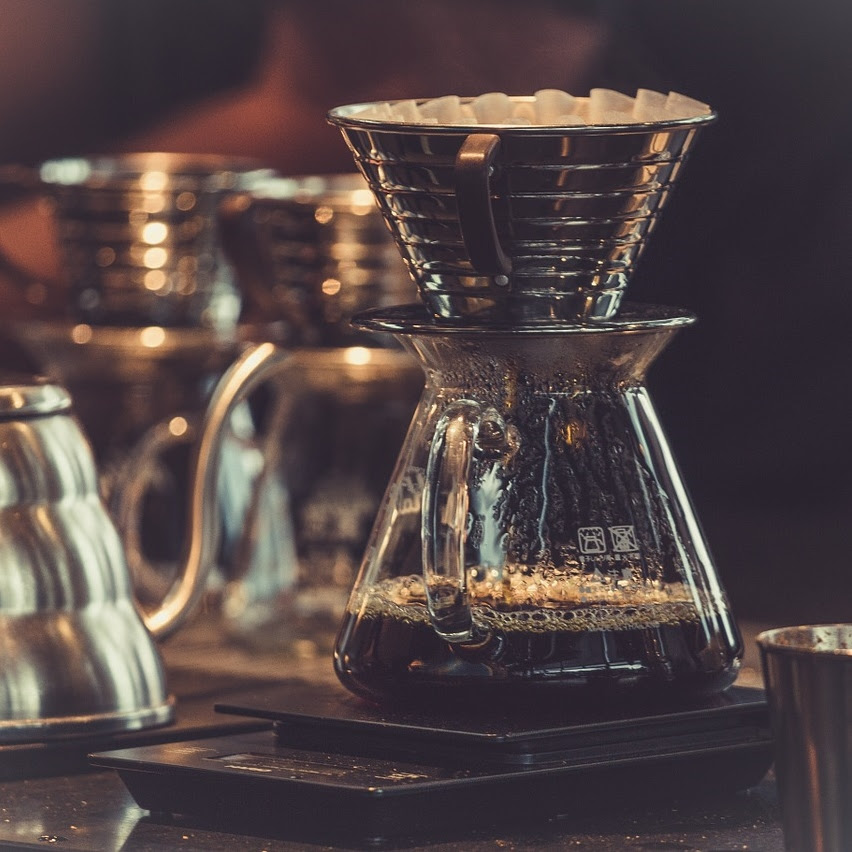
One of the oldest, simplest, fastest and cheapest ways to brew coffee is the drip method using a coffee cone and paper filter. Hot water is poured evenly over coffee grounds in a paper filter. With gravity, the brewed coffee drips slowly and directly into a cup or pot. Coffee cones are made of plastic, glass, stainless steel or ceramic. The shape of the cone and their filters will influence the flavours.
- Grind of Beans: medium-fine to coarse
- Quantity of Coffee: 2 to 3 tablespoons of coffee (15 – 21 grams)
- Brewing Time: 3-4 minutes
- Flavour Profile: Smooth, round body
- Produces a single cup of coffee
- Easy to clean
- Portable
- Requires paper filters that match the cone
Plunger/Press: French Press
The French Press method, invented in 1929, is widely considered as the best and easiest method for brewing superior and consistent coffee. It extracts, arguably, more superior flavours than any other method. In a press pot, ground coffee is soaked, steeped and strained in hot water; therefore, coffee’s flavourful essential oils, caffeine and antioxidants are better diffused and preserved leaving the purest flavours of the coffee. It is well suited for coffee drinkers that enjoy a luscious, expressive and complex taste experience.
- Grind of Beans: coarse
- Ground Coffee: 2-2.5 tablespoons of coffee (14-17g) for one cup
- Brewing Time: 4 minutes
- Flavour Profile: pure, clean flavour nuances that are complex and robust body
- Various sizes producing up to 8 cups of coffee
- Easy to clean
- Portable, especially the stainless steel thermal variety
- No filters required
Plunger/Press: AeroPress
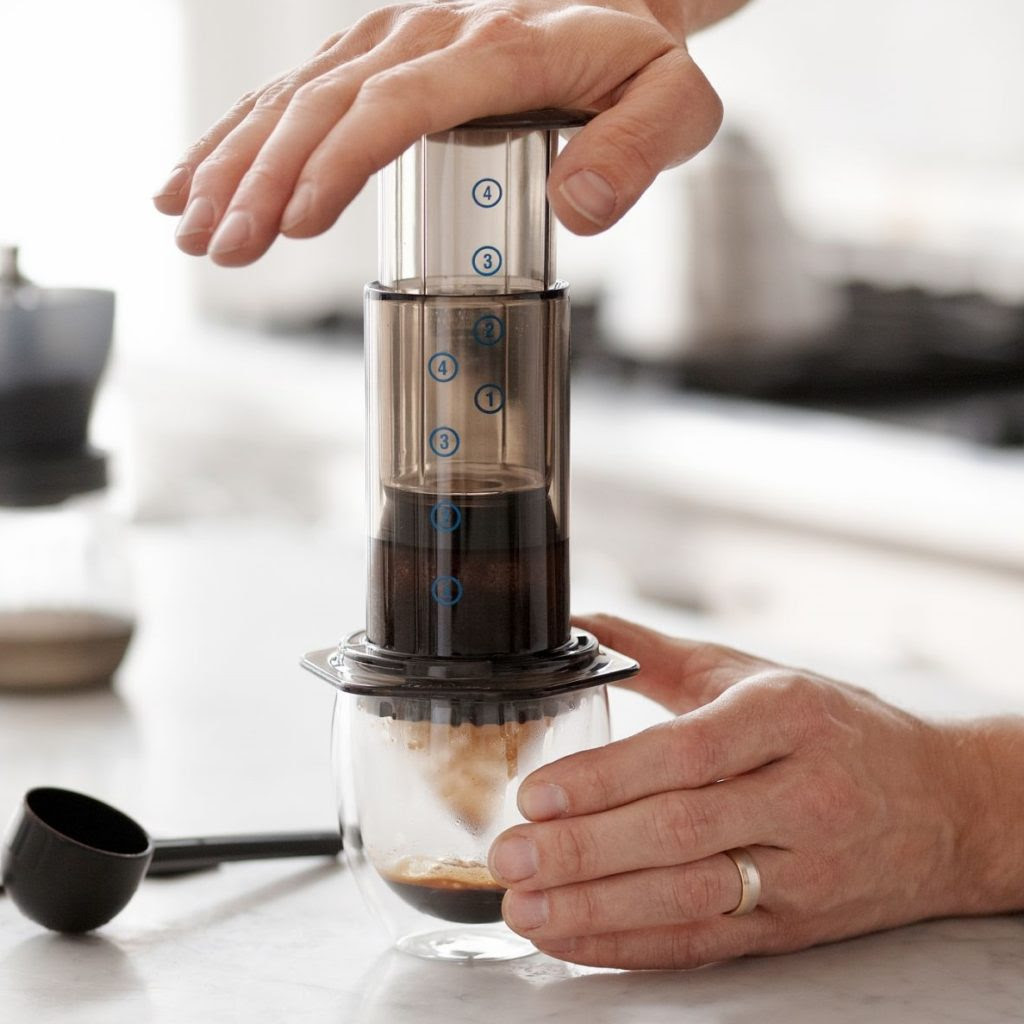
Relatively new, the maker of Aerobie Frisbee (Alan Adler) created and launched the AeroPress in 2005. The AeroPress is plastic and comes in 3 parts. A filter sits in a coffee basket at the bottom of the brew chamber. Coffee grounds rest in the brew chamber where hot water is added then immerses/steeps the coffee. To extract the coffee, a plunger is pressed down creating air pressure to force brewed coffee through a filter and into a cup.
- Grind of Beans: fine-medium
- Ground Coffee: 2.5 tablespoons of coffee (17g)
- Brewing Time: 1-2 minutes
- Flavour Profile: sweet, full-bodied, espresso-style coffee
- Produces a single cup of coffee
- Easy to clean
- Portable, especially popular with campers
- Requires AeroPress micro paper filters (or a fine metal filter)
Stovetop Moka Pot
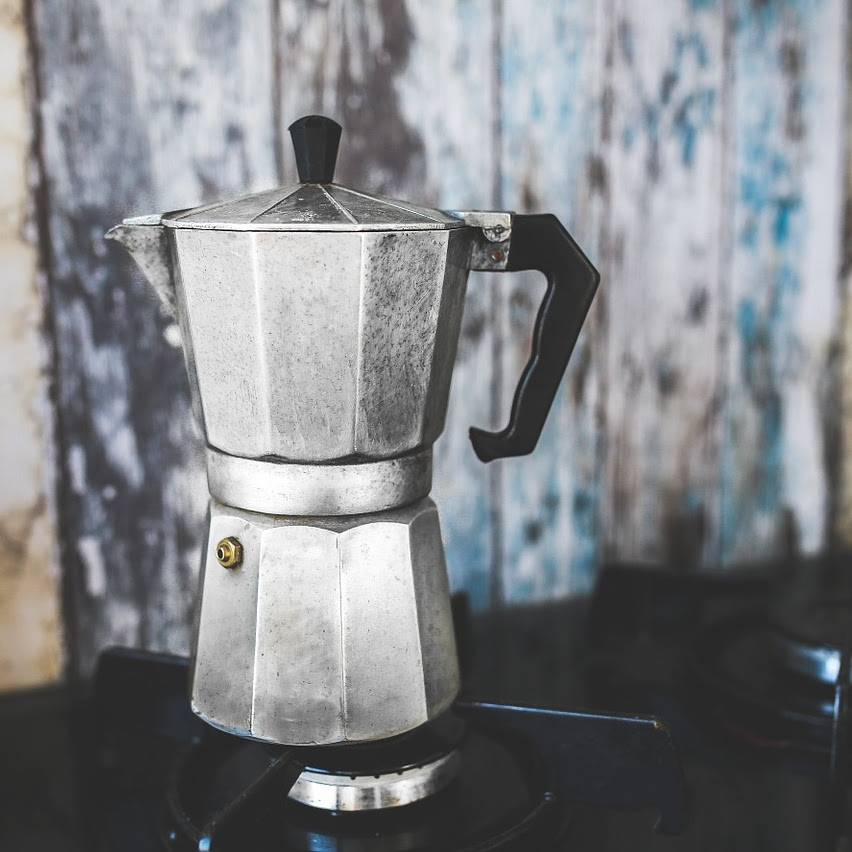
Originally patented in 1933 by Alfonso Bialetti, stovetop style coffee makers use steam pressure from boiled water in the lower section to pass through coffee grounds in the mid chamber of the pot. Brewed coffee then sits in the higher chamber. A well designed stovetop pot will created better pressure.
- Grind of Beans: Fine-Medium Coarse
- Ground Coffee: 2.5-3 tablespoons of coffee (17-22g)
- Brewing Time: 5 minutes
- Flavour Profile: espresso-style coffee, strong and can be bitter
- Requires a gas stove
- Produces the equivalent of a single or double shot
- Easy to clean
- Portable and durable
- No extra filters required
Siphon
The siphon is a fancy and flashy coffee maker. It can be a fun way to make coffee and impress friends at the same time, but it can be a fussy process. It was invented in Germany in the 1840s. Coffee grounds are added to the upper vessel and vapor pressure forces hot water up to immerse the coffee. Once the heat is removed, gravity pushes the brewed coffee back through a filter into the bottom vessel.
- Grind of Beans: Medium coarseness
- Ground Coffee: 6 tablespoons of coffee (40g)
- Brewing Time: 6 minutes
- Flavour Profile: mellow and delicate flavours
- Produces several cups of coffee
- Finicky to clean
- Delicate and hard to store. Not portable.
- Requires candle or butane burner (unless it has an electric heater), metal or cloth filter